Rodent Control Pharr, TX (78577) – Same-Day Rat & Mouse Specialists
We handle roof rats, Norway rats, and house mice — inspection, elimination, and permanent entry point sealing. Not a general pest company. Just rodents, done right.
Why call us
Rodent specialists — not a general pest company
Pharr has a rodent problem most Texas cities don’t face — and most pest companies don’t understand it. For rodent control Pharr actually needs, Pharr Rodent Shield handles roof rats, Norway rats, and house mice throughout ZIP code 78577 and the surrounding Rio Grande Valley. We focus exclusively on rodent problems — not termites, not lawn care, not roaches. Just rats and mice, handled correctly, from inspection through permanent exclusion.
Your home sits in the middle of a city that borders one of the busiest commercial cargo crossings on the US-Mexico border, is surrounded by citrus groves and agricultural fields on three sides, and deals with subtropical heat that never gives rodent populations a winter reset.
These conditions make rodent infestations common in Pharr. If rats or mice have found their way onto your property, it’s rarely by chance—and without proper treatment, the problem is unlikely to resolve on its own.
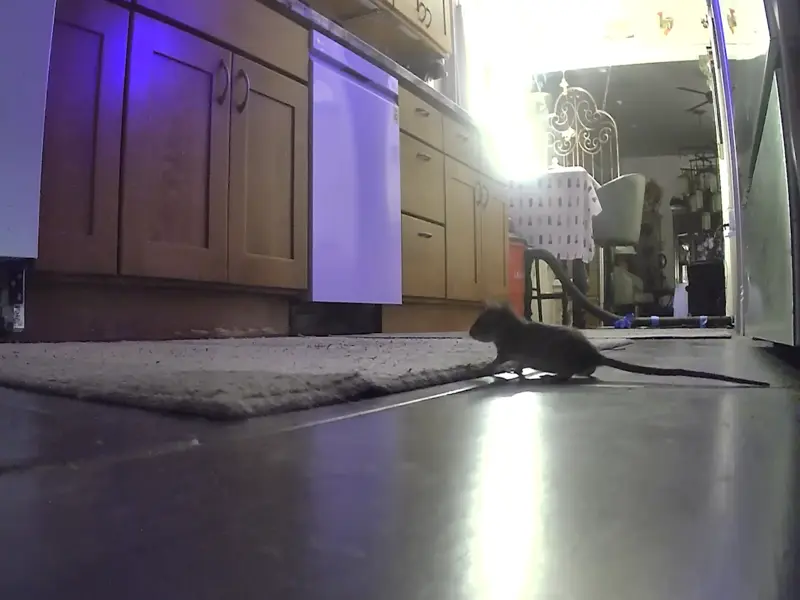
Why Rodent Control in Pharr TX is Different From the Rest of Texas
Most pest control companies that serve Pharr treat it the same way they treat everywhere else. Pharr is not one of those cities.
The Pharr-Reynosa Bridge
The 3rd-largest commercial trade crossing on the US-Mexico border. Every northbound truck from Reynosa enters here. Warehouse districts along Cage Boulevard create a permanent rodent
No winter reset
Pharr’s humid subtropical climate means average highs of 97°F in August and lows of 50°F in January. There is no freeze event. Rodent populations compound month after month with zero cold-season die-off.
Agricultural borders
Drive west on Expressway 83 or north on US-281 and you’re in active farmland within minutes. Citrus harvest (October–January) and pesticide spraying push field rodents into residential neighborhoods every year.
Older housing stock
South Pharr and Las Milpas contain homes built in the 1950s–1970s. Aged stucco, deteriorated utility seals, and original plumbing penetrations create entry points most homeowners don’t know exist.
Drainage and flooding
September–October flooding flushes Norway rat burrows in drainage ditches into the nearest structures. The weeks after a major rain event consistently produce a surge in rodent calls throughout the city.
LOCAL RODENT CASE STUDIES — REAL PROBLEMS IN PHARR
Three Rodent Problems That Show You Exactly What to Expect
Every rodent infestation in Pharr is a little different. Here are three common situations we handle — the signs, what we find, the treatment, and what makes the solution permanent.
CASE STUDY 01 — SOUTH PHARR
Scratching in the attic. Roof rat activity confirmed.
The situation:
A homeowner in South Pharr starts hearing scratching and movement above the ceiling after dark. During the inspection, we find droppings around the attic perimeter, tunneled insulation, and dark rub marks along plumbing and utility lines. Exterior inspection identifies gaps around the roofline and soffit that are large enough for roof rats to enter.
What we did:
We confirmed the activity as roof rats and mapped their likely travel routes before placing tamper-resistant bait stations at the identified activity points. We then sealed the accessible roofline and utility entry points using appropriate exclusion materials. The homeowner was shown exactly what we found and what was repaired.
The outcome:
Rodent activity declined as treatment took effect, while exclusion work addressed the openings that allowed the rats into the home in the first place. Follow-up inspection confirmed the exclusion work was holding and activity was continuing to decline.
✓ Roof rat identification
✓ Targeted treatment
✓ Roofline & utility exclusion
✓ Follow-up inspection
CASE STUDY 02 — LAS MILPAS
Mice kept coming back. The entry point was the real problem.
The situation:
A Las Milpas homeowner has repeatedly used store-bought mouse traps but continues finding droppings under the kitchen sink, around the pantry, and near the garage. The problem appears to disappear temporarily, only to return again.
What we did:
The inspection identified house mouse activity along interior wall junctions and several small exterior openings around an AC line penetration, utility entry point, and worn door seal. Because mice can enter through openings around 1/4 inch, simply removing the mice would not solve the underlying problem.
We placed traps along confirmed travel routes and addressed the accessible entry points identified during the exterior inspection.
The outcome:
The treatment addressed the active mouse population while exclusion reduced the opportunity for new mice to enter through the same openings. The homeowner received a clear explanation of the work rather than simply another round of traps.
✓ House mouse identification
✓ Interior trapping
✓ Entry-point inspection
✓ Structural exclusion
CASE STUDY 03 — PHARR-REYNOSA CORRIDOR
Norway rats around the property. Drainage and ground-level access were the concern.
The situation:
A property near the industrial and drainage areas around the Pharr-Reynosa corridor begins showing signs of ground-level rodent activity. The homeowner notices burrow openings near the foundation and droppings around exterior areas.
What we did:
The inspection focused on ground-level activity, foundation gaps, drainage-adjacent areas, utility penetrations, and other potential access points. Evidence was consistent with Norway rat activity. We positioned tamper-resistant treatment stations along identified travel routes and addressed accessible structural openings that could provide entry into the building.
The outcome:
The treatment targeted the active rat routes while exclusion work reduced access to the structure. A follow-up visit was used to evaluate station activity, inspect the repaired entry points, and determine whether additional adjustments were necessary.
✓ Norway rat identification
✓ Ground-level activity mapping
✓ Targeted bait stations
✓ Foundation & utility exclusion
✓ Follow-up inspection
What these situations have in common
Treating the rodents is only part of the job.
In Pharr, rats and mice can continue entering through roofline gaps, utility penetrations, worn seals, foundation openings, and other structural access points. That is why our process combines species identification, targeted treatment, exclusion, and follow-up rather than relying on traps or bait alone.
Have you noticed scratching, droppings, gnaw marks, or rodent activity around your Pharr home?
Call Pharr Rodent Shield at (956) 670-4899 to schedule an inspection.
The three rodents you’re dealing with in Pharr TX
The species in your home determines where they are, how they got in, what signs they leave, and how treatment needs to be structured. In Pharr, three commensal rodent species account for nearly every infestation we see.
Roof rat
Dark-colored climbers that nest in attics, palm trees, and along utility lines. They enter through roofline/soffit joints — a half-inch gap is enough. If you’re hearing scratching overhead at night, this is almost certainly the species.
Key behavior: Neophobic — ignores snap traps for 1–2 weeks. Correct placement matters more than bait.
Norway rat
Stocky ground-level burrowers concentrated near the Pharr-Reynosa Bridge industrial zone, Cage Boulevard warehouses, and drainage infrastructure. Found at ground level, not overhead. Excellent swimmers — can enter through broken sewer lines.
Key sign: 2-inch diameter burrow holes near foundations or along fence lines at ground level.

House mouse
The most frequently encountered rodent in Pharr homes. A single female produces 6 litters per year, 6–8 offspring each — all reaching reproductive maturity in 6 weeks. In Pharr’s climate with no winter break, 2 mice in January is 40+ mice by April.
Entry point: Any gap 1/4 inch or larger — including AC line penetrations and worn door sweeps.
Not sure which rodent you have? We identify the species before any treatment begins.
How We Compare to Local Pest Companies
We’re not being modest — Pharr families deserve to see the real differences.
Fox Pest Control
General pest
Safeguard Pest Control
Termites first
Wipe-Out Pest Control
Full pest list
Del Valle Pest Control
General pest
Pharr Rodent Shield
Rodents only ✓
Pharr’s only rodent-only specialists. 100% focused on rats and mice — no distractions, no generalists. Permanent exclusion, transparent pricing, 90-day guarantee.
Our process
How we handle rodent problems in Pharr
1. Inspection
We check the attic for tunneled insulation, dropping accumulation, urine staining, and sebum runs on plumbing lines that indicate active travel routes. On the exterior, we work through a 12-point checklist covering roofline joints, vent penetrations, AC line entry points, gas and plumbing gaps, garage door seals, and the foundation. The inspection tells us exactly what we’re dealing with before we touch anything.
2. Species identification
Treating a roof rat infestation the same way as a house mouse infestation doesn’t work. We identify the species from droppings, sounds, entry point type, and nesting location before any treatment begins. In many Pharr homes we find more than one species present, requiring a multi-layered approach.
3. Treatment
For rats, we deploy tamper-resistant bait stations at identified travel routes — not at random corners. For mice, we combine interior snap traps at wall junctions with tamper-resistant stations where appropriate. All products are EPA-registered and TDA-approved. We explain exactly what we’re placing, where it’s going, and why — before we start.
4. Exclusion — the step that makes it permanent
We physically seal every gap rodents use or could use to enter: steel wool packed into gaps and sealed with caulk, hardware cloth over vent openings, mortar around utility pipe penetrations, door sweep replacement, garage door threshold seals. Without this step, treatment is temporary. Rodents from the drainage system, neighboring properties, and agricultural fields will re-enter through the same gaps.
5. Follow-up
We return after initial treatment to check bait station consumption, assess trap results, confirm exclusion work is holding, and verify activity is declining. If something hasn’t worked as expected, we adjust the plan. Rodent control is a process, not a one-time event.
Ready to start? Same-day inspection available throughout Pharr.
What rats and mice actually risk to your family’s health in Pharr
The Rio Grande Valley has a genuine rodent-borne disease burden that most rodent control websites don’t address with real data. Here is what the data actually shows.
Hidalgo County flea-borne typhus cases, 2008–2022
The highest case count of any county in Texas, per Texas Department of State Health Services data. In July 2026, a Texas A&M study (Parasites and Vectors, DOI: 10.1186/s13071-026-07421-1) confirmed the murine typhus pathogen in fleas from the Rio Grande Valley. Roof rats are the primary reservoir host. Controlling roof rats directly reduces typhus exposure risk for your family.
Murine typhus
Endemic in Hidalgo County. Transmitted via fleas that feed on infected rats then bite humans. Symptoms: fever, headache, rash. Texas saw 847 confirmed cases statewide in 2024.
Hantavirus
Transmitted by breathing in air contaminated with dried rodent droppings or urine. Risk is highest when cleaning up after an infestation. Professional remediation is the safe approach.
Leptospirosis
Spread through contact with water contaminated by rodent urine. Most relevant in Pharr after flooding events — when Norway rat burrows are flushed into standing water in yards and ditches.
Salmonellosis
House mice and roof rats contaminate food preparation surfaces and pantry storage through droppings and urine. A direct food safety risk in any Pharr home with an active infestation.
Why a specialist
Why rodent control requires a specialist, not a general exterminato
General pest companies handle dozens of pest types. Their technicians need to know termite biology one day, bed bug heat treatment the next. That breadth is useful for many pest problems. But rodent control — specifically the exclusion work that makes the difference between a temporary fix and a permanent solution — requires structural knowledge and species-specific expertise that most general pest programs don’t prioritize.
The inspection protocol for a rodent problem is fundamentally different from a standard pest inspection. You need someone who knows what a sebum run on a gas line looks like, what it means when attic insulation is tunneled rather than trampled, and why a tamper-resistant bait station placed at the wrong point in a roof rat’s travel route will sit untouched for weeks.
We do not treat roaches, mosquitoes, or termites. We handle rats and mice — completely, from the first inspection to the final follow-up.
TDA licensed
Every treatment performed under a valid Texas Department of Agriculture Pest Control License. Verify our license number directly at the TDA website.
Transparent pricing
Written treatment plan and cost breakdown after inspection, before any work begins. Mouse treatment: $150–$400. Full exclusion: $500–$1,500.
Satisfaction guarantee
If rodent activity continues after our treatment and exclusion work, we return and re-treat at no additional charge.
Family-safe methods
All bait stations are tamper-resistant — locked units children and pets cannot open. EPA-registered products applied per label directions.
Our Rodent control services in Pharr TX
Rat control
As a leading rodent exterminator Pharr (78577), we focus on complete removal of roof rats and Norway rats through species identification, targeted treatment, and structural exclusion.
House mouse
House mouse extermination using tamper-resistant bait stations, interior trapping, and full entry point exclusion. Safe for children and pets.
Rodent Exlusion
Permanent structural sealing of every entry point rats and mice use to enter your Pharr home. Steel wool, hardware cloth, and mortar applied at all 12 common entry points.
Rodent Inspection
Same-day attic and exterior inspection. We identify the species, locate every entry point, and give you a written report with photos and itemized pricing — before any work begins.
Common questions
What are the signs you have a rodent problem in your Pharr home?
The most reliable signs are droppings in the kitchen, pantry, or under sinks; gnaw marks on food packaging or utility lines; scratching sounds from the attic or inside walls at night; a musky ammonia odor in enclosed spaces; and visible smear marks along baseboards. In attic spaces, look for tunneled insulation and droppings on the decking. Any one of these signs warrants a professional inspection — rodent populations in Pharr grow faster than in northern climates because there is no cold season to slow the reproductive cycle.
How quickly do rodent infestations grow in Pharr TX?
Faster than most homeowners expect. A pair of house mice produces six litters per year with six to eight offspring per litter — those offspring reach reproductive maturity in six weeks. In Pharr’s subtropical climate, this cycle runs year-round with no interruption. A two-mouse problem in November is realistically 50 to 100 mice by spring if nothing is done. Roof rats reproduce somewhat more slowly, but their attic-based nesting means a colony grows steadily and creates compounding structural and health risks the longer it remains.
Why did store-bought traps not work on the rats in my Pharr home?
Roof rats — the most common rat species in Pharr TX — exhibit neophobic behavior, meaning they avoid new objects placed in their environment. A snap trap placed by a homeowner will often sit untouched for one to two weeks while the rats route around it. Professional rodent control addresses this through correct bait selection and trap placement at confirmed travel routes, identified from rub marks and droppings. House mice are less neophobic but still respond poorly to traps placed along open floor space rather than against baseboards where mice actually travel.
Is the rodent problem near the Pharr-Reynosa Bridge worse than in other neighborhoods?
Yes — meaningfully so. The warehouse and industrial corridor adjacent to the Pharr-Reynosa International Bridge on South Cage Boulevard functions as a consistent rodent reservoir. Commercial cargo from Reynosa has historically been a vector for both Norway rats and roof rats. Residential areas in Las Milpas and South Pharr that border this zone deal with ongoing migration of rodents from the industrial area into residential structures, particularly in the fall when temperatures drop. Homeowners in these neighborhoods should treat exclusion work as an annual maintenance item rather than a one-time fix.
Contact Us
One call ends your rodent problem for good. We serve Pharr and surrounding areas with fast response times and guaranteed results.
Call us for a quote today!
(956) 670-4899