What kind of rats are in Pharr TX?
Roof rats (Rattus rattus) are the most common rat species in Pharr TX and throughout the Rio Grande Valley. They are slender, dark climbers that live in attics, palm trees, and along utility lines — not in the ground. If you are hearing scratching overhead at night, finding pointed droppings on high surfaces, or seeing a rat running along a fence or utility wire at dusk, you are almost certainly dealing with a roof rat.
Pharr is one of the most favorable environments for roof rats in Texas. The combination of warm year-round temperatures, an abundance of palm trees and citrus groves, dense residential tree canopy, and no hard freeze to reset the population means roof rats here breed continuously and maintain pressure on residential structures in a way most other Texas cities simply do not see.
Call for a Same-Day Roof Rat Inspection
H2: How to Identify a Roof Rat — What They Look Like and How They Move
Before anything else, let’s make sure you are actually dealing with a roof rat and not a Norway rat or a house mouse. The treatment approach, entry points, bait placement, and exclusion materials are different for each species. Misidentifying the animal is one of the main reasons pest control treatments fail — you seal the wrong gaps and place traps in the wrong locations.
Physical appearance
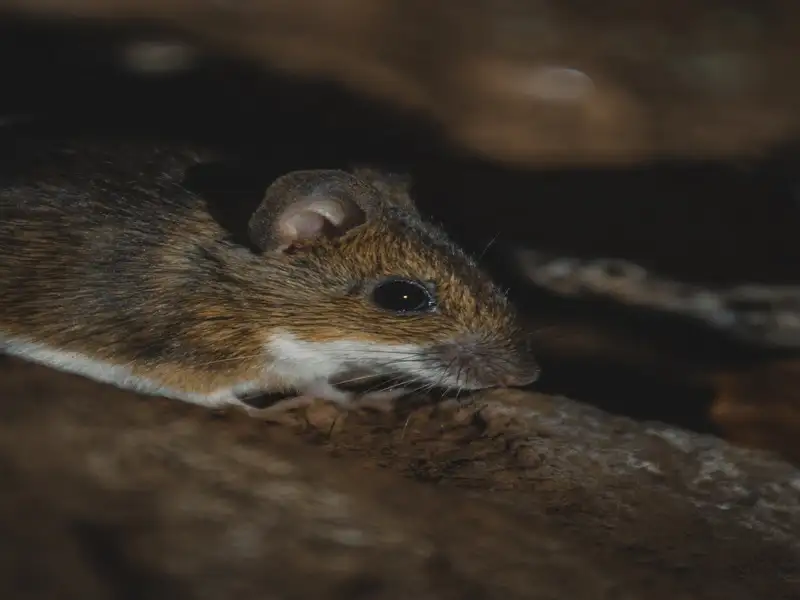
The roof rat (Rattus rattus) — also called the black rat, ship rat, or occasionally the fruit rat or palm rat — is a slender, lightweight animal compared to the stockier Norway rat. Body length runs six to eight inches, but the tail is longer than the body, typically seven to ten inches, giving the animal an elongated appearance that is immediately distinctive once you know what to look for. Total length including the tail is commonly thirteen to seventeen inches.
Fur color ranges from dark brown to nearly black on the back, with a lighter gray or cream underside. The belly color distinguishes the three recognized subspecies, but in practice what you see in Pharr homes is most commonly the darker-backed form with a gray belly. The nose is pointed — not blunt like the Norway rat’s. The ears are large and nearly hairless, prominent enough that they can be folded over and touch the eye. The eyes are large and dark, giving the animal an alert, quick appearance.
Weight ranges from five to nine ounces — noticeably lighter than a Norway rat, which can reach seventeen ounces. If you have seen a rat in your Pharr home and it looked quick, sleek, and agile — not heavy and lumbering — it was almost certainly a roof rat.
Movement and behavior
The most important thing to understand about roof rats is that they are climbers, not burrowers. Everything about their biology is oriented toward elevated spaces. They travel along the tops of fences, along utility lines and communication cables, through the upper branches of Pharr’s palm trees and citrus groves, and along the rooflines of homes. They rarely come to ground level by choice. If you have seen a rat running along the top of your backyard wall at dusk, or you have noticed one crossing a power line between trees — that is a roof rat. A Norway rat does not do that.
They are strictly nocturnal. Roof rat activity peaks between midnight and four in the morning. If you are hearing sounds from the ceiling or attic during the day, it is worth investigating whether you are dealing with squirrels rather than rats. Roof rat sounds at night are a quick, skittering run across the ceiling — sometimes a rolling sound if they are moving objects — and occasionally a distinctive scratching that many Pharr homeowners describe as sounding like something is dragging its nails across the ceiling above the bedroom.
They are wary of new objects in their environment — a behavior called neophobia. This is the reason a snap trap placed under the kitchen sink sits untouched for two weeks before catching anything, if it ever does. Roof rats will avoid a new object in a familiar area for days or weeks before approaching it. Professional trap placement accounts for this by positioning traps at confirmed travel routes identified from physical evidence, not in random locations.
What they eat
Roof rats in Pharr are strongly drawn to citrus fruit. They will eat oranges while they are still hanging on the tree, consuming the flesh and leaving only the hollowed-out rind. They eat lemons, grapefruits, and limes the same way. If you have citrus in your yard and you are finding hollowed-out fruit on the ground or partially consumed fruit still on the branch, roof rats are present and foraging in your yard every night.
Beyond citrus, roof rats eat pet food left outdoors, birdseed, stored grain and dry goods inside the home, grease residue on outdoor grills, and virtually any organic material they can access. They are omnivores and opportunists — they eat what is available. In a Pharr neighborhood with active citrus trees, palms with accessible berries, outdoor pet bowls, and unsecured garbage, there is sufficient food to sustain a large roof rat population entirely outdoors while they nest in your attic.
Where Roof Rats Live in Pharr TX — Attics, Palm Trees, and What’s Really Going On in Your Neighborhood
Pharr’s residential landscape is roof rat habitat. Every element of a typical Pharr neighborhood — the palm trees in front yards, the citrus and fruit trees in back yards, the mature shade trees overhanging fence lines, the dense residential canopy, the utility lines running between structures — creates a connected elevated highway that roof rats travel through every night.
In your attic
The attic is the most common nesting site for roof rats in Pharr homes. It is warm, protected from predators, close to the roof-level entry points they use, and — in many Pharr homes — filled with soft fiberglass insulation that makes ideal nesting material. A roof rat colony in a Pharr attic will establish defined travel routes through the insulation, accumulate droppings along these routes and in corner areas where they congregate, build nests in the deepest and most protected areas of the insulation batt, and cause progressive damage to the insulation’s thermal performance as they compact, tunnel, and contaminate it.
An established roof rat colony in a Pharr attic does not reveal itself dramatically. The first sign most homeowners notice is the overhead scratching at night. The second sign is droppings found in the attic, in the garage ceiling void, or on surfaces inside the home that connect to the attic — the top of kitchen cabinets, for example, where rats have entered through an interior wall void. By the time droppings are appearing inside living spaces, the colony has been established for some time.
In palm trees
Phoenix palms, queen palms, and the various palm species common in Pharr yards provide dense frond skirts — the accumulated layer of dead fronds that builds up around the trunk below the green canopy. This skirt is prime roof rat nesting material. It is dry, sheltered, elevated, and warm. A palm tree with an untrimmed frond skirt within four feet of your roofline is a staging area that roof rats use to access your attic. We see this pattern constantly in Pharr — the rat runs from the palm trunk, through the frond skirt, out along a branch, onto the roofline, and into the attic through a soffit gap. The entire path takes them six seconds.
In citrus and fruit trees
Beyond palms, the citrus trees in Pharr yards — grapefruits, oranges, lemons — are both a food source and a nesting site. Roof rats will nest in the dense interior canopy of a large citrus tree and commute to the attic to sleep. They build compact nests of leaves and twigs inside the tree, visible if you know where to look — a tight bundle of material wedged into a branch junction. During the October-to-January citrus harvest season in Hidalgo County, when orchards and residential trees are full of ripe fruit, roof rat activity in Pharr residential neighborhoods increases measurably. Agricultural pesticide spraying that displaces field rodents from surrounding farmland compounds this seasonal pressure.
Along utility lines and fence tops
Roof rats use utility lines — power lines, cable, telephone — as travel corridors between properties and between trees and structures. A roof rat will run along a power line at full speed without hesitation. This is why a rodent problem in one Pharr home is almost never isolated to that property — the elevated travel network connects entire blocks. Addressing the infestation in your home while the neighbor’s palm tree, which branches toward your utility line, remains untrimmed is a temporary result.
Why Pharr TX Has a Roof Rat Problem That Most Texas Cities Don’t
Roof rats are found throughout Texas — Texas A&M’s Mammals of Texas identifies Rattus rattus as common across most of the state, particularly in towns and cities. But the density and persistence of the roof rat problem in Pharr is different from what you see in, say, Dallas or San Antonio, and the reasons are specific.
The climate never resets the population
Pharr’s humid subtropical climate (Cfa classification) produces average August highs of 97°F and average January lows around 50°F. There is no sustained freeze. There is no event that kills off the roof rat population the way a hard northern winter naturally does. Roof rats in Pharr breed year-round — three to five litters per year in climates with cold winters becomes four to six litters per year in Pharr’s conditions, with no seasonal die-off between. The population compounds month after month with nothing to interrupt it. The rats you treated six months ago have had offspring, and those offspring have had offspring.
Pharr has exactly the habitat roof rats evolved for
Roof rats originated in tropical Asia. They are a subtropical species that was transported around the world by cargo ships — which is itself relevant to Pharr, as we will get to. Their ideal habitat is dense vegetation with abundant fruit, warm temperatures, and elevated structure to nest in. A Pharr neighborhood with mature palms, backyard citrus, dense tree canopy, and wooden-framed homes is not marginally suitable for roof rats — it is optimal. They thrive here the way they thrive in coastal Florida and California’s citrus belt.
The Pharr-Reynosa International Bridge
This is the detail that is specific to Pharr and that no neighboring city has at this scale. The Pharr-Reynosa International Bridge on South Cage Boulevard is the third largest commercial trade crossing on the Texas-Mexico border, handling all northbound commercial truck traffic from Reynosa, Tamaulipas. Roof rats have traveled as ship and cargo stowaways for centuries — the species name reflects their history of being transported in ships’ rigging and cargo holds. Northbound cargo from Reynosa enters the US through Pharr. The warehouse and industrial corridor along South Cage Boulevard and the bridge approach area sustains a large, permanent rat population that has continuous opportunity to establish in residential areas to the north and east of the industrial zone.
Agricultural displacement
Pharr sits at the edge of Hidalgo County’s agricultural heartland. Citrus groves — grapefruit, orange, lemon — and row crops surround the city’s western and northern edges. When growers spray pesticides, field rodents including roof rats migrate toward residential areas. When citrus harvest runs from October through January, the agricultural disturbance pushes rodents out of their field habitat. West Pharr and the neighborhoods adjacent to the agricultural perimeter deal with predictable seasonal surges in roof rat activity that homeowners who moved from other cities are not prepared for.
Dense residential canopy
Pharr’s residential neighborhoods have mature tree cover — palms, citrus, mesquite, and ornamental species. This canopy is connected. Trees overhang fences, branches touch rooflines, utility lines run between them. A roof rat does not need to cross open ground to travel half a mile through a Pharr neighborhood — it stays elevated the entire distance. This connectivity means that roof rat pressure is a neighborhood-level phenomenon, not a property-by-property one. Sealing your home is necessary and effective, but understanding that the pressure source is external and continuous is important for setting realistic expectations.
Signs You Have Roof Rats in Your Pharr TX Home
These are the specific signs to look for — and importantly, where to look for them. The location of evidence tells you as much as the evidence itself.
Droppings — at elevation, not at floor level
Roof rat droppings are roughly half an inch long, banana-shaped or curved, pointed at both ends, and dark brown to black when fresh. They are typically found at elevated locations: on attic beams and decking, along the top of wall plates in the attic, on shelf edges in garages that connect to ceiling voids, on top of kitchen cabinets near a wall void, and along the tops of fence rails outside. This elevation is the key distinguishing characteristic from Norway rat droppings, which are found at ground level. Fresh droppings are dark, moist, and slightly soft. Droppings more than a few days old turn gray and crumble when touched.
Rub marks (sebum runs)
Where roof rats travel regularly — along a beam, beside a pipe, across the top of a wall plate — they leave a dark grease smear from the oils in their fur. These sebum marks accumulate over time into a clearly visible dark trail. In an attic with an established roof rat population, sebum runs on plumbing lines, gas lines, and structural framing tell you exactly where the rats are traveling — and exactly where traps and bait stations need to go. This is the evidence we use for trap placement. A bait station placed at a confirmed sebum run catches. A bait station placed at random sits untouched.
Hollowed-out citrus fruit
If you have citrus in your Pharr yard — grapefruit, orange, lemon, or lime — and you find fruit on the ground with the flesh eaten out and only the rind remaining, or fruit still on the branch with a chewed hole eaten into it, roof rats are foraging in your yard nightly. This is a sign that is highly specific to roof rats among the rodents you will encounter in Pharr — house mice do not climb citrus trees, and Norway rats do not either in typical residential situations. Roof rat-damaged citrus is one of the clearest identification signals available.
Sounds from overhead — at specific times
The sounds most Pharr homeowners describe are a quick, skittering run across the ceiling that happens multiple times in the same night, sometimes a rolling or tumbling sound, and occasionally a scratching or gnawing sound from a fixed location. These sounds happen between roughly eleven at night and four in the morning — roof rats are active after dark and rest during daylight hours.
The direction matters: overhead sounds coming from the ceiling or attic are roof rats. Scratching from inside the walls at floor level, or from below the floorboards, is more likely to be house mice or Norway rats respectively. The sound of something running repeatedly across the ceiling in the same path is almost certainly a roof rat using an established travel route in the attic.
Pet behavior
Dogs and cats in Pharr homes with roof rat activity often become alert or agitated near walls, cabinet bottoms, and ceiling areas where rats are active on the other side of the surface. A dog that suddenly starts sniffing along the base of a wall or staring at the ceiling and growling at night is detecting roof rat scent through the wall material. This is an underrated early indicator that most homeowners dismiss until other signs appear.
Damaged insulation in the attic
If you go into the attic of a Pharr home with an established roof rat colony, you will find the insulation is not lying flat the way it was installed. There are trails — pathways where the insulation has been flattened and compacted by repeated rat travel. There are areas where the insulation has been pulled apart and gathered into nest shapes. There is dropping accumulation along the trails and in corner areas. There is urine staining on the decking in heavily used areas. The attic of a home that has had roof rats for six months or more looks significantly different from the attic of a home without them.
How Roof Rats Enter Your Pharr TX Home — The Specific Entry Points
A roof rat needs a gap of half an inch to enter a structure. In Pharr’s housing stock — particularly the older construction in South Pharr and Las Milpas — that gap exists in multiple locations at the roofline and in the upper portion of exterior walls.
The soffit-to-roofline junction is the primary entry point for roof rats in Pharr. The gap that develops at the junction between the soffit board and the fascia, or between the soffit and the roofline, opens over years of thermal cycling in South Texas heat. Wood framing expands in summer heat above 100°F and contracts in winter. Over decades of this cycling, the junction opens. A roof rat running along the roofline finds this gap, checks it with its nose — roof rats can compress their skull to fit through a space their skull can pass through — and enters the attic. This happens at night. You are asleep.
Ventilation openings — whirlybird turbines, mushroom vents, gable end vents, and utility stack vents — are secondary entry points. Vent screens deteriorate in Pharr’s UV environment faster than in most Texas markets. A screen that was adequate when installed may have holes or open joints after several years of sun exposure. The gap around a deteriorated vent boot at the roof penetration is sufficient for a roof rat.
Trees and palms bridging to the roofline — this is the entry pathway that exclusion work alone cannot fully address. A palm tree with a frond skirt that touches the roofline, or a shade tree with a branch within four feet of the fascia, gives a roof rat direct access to the roofline without requiring any aerial crossing. We can seal every gap in the roofline and still have rats returning if the tree contact is not addressed. Trimming trees so no branch comes within four feet of any part of the structure is a required part of any complete roof rat prevention plan in Pharr.
Utility line entry points — where electrical conduit, cable television lines, or other utility penetrations enter the structure near the roofline, gaps around the penetration allow entry. These are typically on the exterior wall just below the roofline and are often overlooked in basic inspections.
AC line penetrations high on the exterior wall — similar to the lower AC line penetrations relevant to house mice, any AC refrigerant line or conduit that passes through the exterior wall near the roofline creates a gap that, if unsealed or poorly sealed, provides roof rat access.
Why Your Snap Trap Has Been Sitting There for Two Weeks Without Catching a Thing
This is the most common frustration we hear from Pharr homeowners who call us after a failed DIY attempt. They bought snap traps, set them in the attic or under the sink, and the traps have sat untouched while the rats continue to move around them.
This is not random. Roof rats exhibit a well-documented behavioral trait called neophobia — fear of new objects. It is a survival mechanism. An animal that evolved over millions of years in environments where new objects meant potential danger learned to avoid novel items in its territory until it had assessed them as safe. A snap trap placed in an attic where a roof rat colony has lived for three months is a new object in a familiar space. The rats detect it — by scent, by visual recognition, by the slight difference in the texture of the surface around it. They route around it. For days. Sometimes weeks.
This is why the YouTube videos of pest control technicians demonstrating that “this bait didn’t work” often show traps placed in completely wrong locations with no relation to where the rats are actually traveling. Correct placement — based on the sebum runs, the dropping concentrations, and the travel routes identified during inspection — makes the neophobia less of a barrier. A bait station placed directly on a confirmed travel route, exactly where a rat is already running every night, is harder to avoid than one placed randomly.
Professional roof rat control accounts for neophobia through placement methodology, not by trying to overpower it. We read the evidence in the attic and place intervention at the right locations. Sometimes we allow an intervention to sit for a few days before activating it, so the rats have time to accept it as part of the environment before it becomes a threat.
What Health Risks Do Roof Rats Carry in Pharr TX?
Roof rats are not simply a nuisance or a property damage concern. In Hidalgo County, where Pharr is located, they are a documented public health vector for a disease that is endemic to this specific area.
Murine typhus — the Hidalgo County data you need to know
Murine typhus (flea-borne typhus, caused by Rickettsia typhi) is transmitted when a flea that has fed on an infected rat bites a human. Roof rats (Rattus rattus) are the primary reservoir host for Rickettsia typhi. The flea population on roof rats in a Pharr attic carries this bacteria. When those fleas drop off the rat and bite a human — which happens during rodent control work without proper protective equipment, or when an attic is disturbed — murine typhus can be transmitted.
Hidalgo County recorded 1,285 confirmed cases of flea-borne typhus between 2008 and 2022, the highest case count of any county in Texas over that period. The Texas Department of State Health Services data identifies the Rio Grande Valley as the highest-density region for murine typhus in the state. A Texas A&M University study published in July 2026 (Parasites and Vectors, DOI: 10.1186/s13071-026-07421-1) confirmed the presence of Rickettsia typhi in flea samples collected from the Rio Grande Valley. Amy Gonzalez, an epidemiologist with the Hidalgo County Health and Human Services Department, has confirmed publicly that typhus is endemic in this area — present in the flea and rodent populations year-round, not arriving seasonally.
Murine typhus symptoms include fever, severe headache, rash, nausea, and body aches, appearing one to two weeks after a flea bite. It is treatable with antibiotics when diagnosed promptly, but it is frequently misdiagnosed as flu or COVID in its early stages because the symptoms are nonspecific. If you or a family member develops these symptoms within two weeks of any work in a Pharr attic or any contact with a rodent or flea-infested area, mention the possibility of murine typhus to your physician.
Controlling the roof rat population in and around your Pharr home reduces the flea load associated with those rats, and by direct extension reduces murine typhus exposure risk for your family. This is not theoretical — it is the mechanism the disease follows, and Hidalgo County’s case data makes the risk concrete.
Leptospirosis
Leptospirosis is spread through contact with surfaces contaminated by rodent urine. Roof rat urine in an attic contaminates the decking, insulation, and any surface below a penetration. Disturbing heavily urine-contaminated insulation without proper protective equipment creates exposure risk. In Pharr, where September and October flooding events introduce contaminated water into yards from disrupted rodent burrows, leptospirosis risk extends beyond the attic environment.
Salmonellosis
Roof rats that access food preparation surfaces, pantry areas, or stored food contaminate those surfaces through their droppings and urine. A roof rat that travels from the attic through a wall void into a kitchen cabinet has contaminated that cabinet’s interior. This pathway is more common in Pharr’s older homes — where wall voids connect the attic to interior cabinet spaces — than homeowners typically realize.
Wiring fire risk
Roof rats gnaw on electrical wiring insulation in the attic and wall voids. Their incisors grow continuously and must be worn down through constant gnawing — it is a biological necessity, not a behavioral choice. Exposed copper wiring in an attic is a fire risk. This risk is documented — rodent gnawing on wiring is identified as a contributing factor in residential fires. In South Pharr and Las Milpas, where original wiring in older homes may already be aging, an active roof rat colony in the attic compounds existing electrical risk.
How We Remove Roof Rats From Pharr TX Homes — And What Prevention Actually Looks Like
Roof rat removal in Pharr is a four-part process. All four parts have to be present for the result to hold.
Part 1 — Attic inspection and travel route identification
We enter the attic and document the infestation — dropping accumulation locations, sebum run paths on structural framing and plumbing lines, nesting sites, the extent of insulation damage, and any entry points visible from the attic interior. This documentation is not just for reporting — it is the placement map for treatment. Every bait station and trap goes where the physical evidence says it should go.
Part 2 — Targeted treatment in the attic and at roofline travel corridors
Tamper-resistant bait stations are placed at confirmed sebum run locations along the attic floor and at any interior point where rat travel is confirmed by evidence. Snap traps are positioned at the same travel routes, set with the trigger mechanism oriented into the wall — parallel to the travel direction, not perpendicular. The neophobia of roof rats means we allow the stations to sit in position for forty-eight hours before activating bait, in some cases, to allow the rats to accept them as part of the environment. We monitor station consumption and trap catches and adjust placement based on results.
Part 3 — Entry point exclusion
Every roofline gap, deteriorated vent screen, and penetration at the upper structure is sealed using appropriate materials for each opening type — copper mesh at roofline joints, hardware cloth over vent openings, structural sealant around penetrations. This work is scheduled concurrent with or shortly after treatment begins. We do not seal before treatment is underway, as sealing first traps live rats inside.
Part 4 — Landscape modifications
This is the part that most pest control companies do not address, and it is why treatments that otherwise were done correctly produce only temporary results. We identify every palm tree with an untrimmed frond skirt within four feet of the roofline, every tree branch that provides a bridge to the structure, and every citrus tree in the yard that is providing nightly food for roof rats. We advise on trimming requirements — which branches, to what clearance distance, why — and on citrus management practices that reduce the food source that keeps roof rats in the yard.
Follow-up verification
We return at seven to fourteen days to check bait consumption, assess trap activity, confirm exclusion is intact, and evaluate whether activity evidence — fresh droppings, new sebum runs — is declining. Roof rat control is considered complete when follow-up inspection shows no fresh evidence over consecutive visits.
Are Roof Rats the Same as Palm Rats in Pharr TX?
Yes — roof rat, black rat, ship rat, palm rat, fruit rat, and citrus rat are all common names for the same species: Rattus rattus. The different names reflect different aspects of their behavior or habitat — palm rat comes from their habit of nesting in palm frond skirts, fruit rat and citrus rat from their strong preference for fruit, ship rat from their history of global dispersal via cargo ships. In the Rio Grande Valley, you will hear all of these names used interchangeably by local residents. When someone in Pharr says they have “palm rats” in their attic, they mean roof rats.
Are Roof Rats Dangerous to My Dogs or Cats in Pharr?
Roof rats are a risk to household pets in two ways. First, the flea population that lives on roof rats can transfer to pets that come into contact with rat travel areas — yards where rats forage, garage areas, and any space where rats have been active. Those fleas can transmit murine typhus bacteria to pets and, through pets, to humans. Second, rats themselves can bite pets that corner or disturb them, though this is uncommon with roof rats, which prefer to flee rather than fight. The more practical concern for pet owners in Pharr is that tamper-resistant bait stations — when properly used by a licensed applicator — are inaccessible to pets. Open bait placement, which we do not use, would be a concern. Discuss your pets, their size, and their typical range of access with us before any treatment so the placement plan accounts for them.
How Do I Tell If I Have Roof Rats or Squirrels in My Pharr Attic?
Squirrels are active during daylight hours — if the sounds in your attic happen during the day and stop at night, squirrels are a strong possibility. Roof rats are nocturnal — the sounds peak between midnight and four in the morning and are absent during daylight. Squirrel droppings are round-ended and slightly larger than roof rat droppings. Squirrels are also significantly less common in Pharr’s urban core than in wooded suburban areas — the landscape species differ. If you are in a Pharr neighborhood with mature pecan trees and the sounds happen primarily in the morning hours, a squirrel inspection is worth including. If the sounds are distinctly at night and droppings are present, it is roof rats.
Will Roof Rats Go Away on Their Own If I Cut Down My Citrus Tree?
No — but it reduces the food pressure. Removing a food source from your yard reduces the attractiveness of your property to roof rats foraging in the neighborhood, and it may reduce the density of activity. But if there is an established colony in the attic, they will continue to use the attic as a nesting site and forage elsewhere. Roof rats maintain established nesting sites persistently. They do not abandon an attic that provides shelter simply because one food source has been removed. Removal of the attic colony requires treatment and exclusion, not landscape changes alone. Landscape changes are part of a complete prevention plan — they are not a replacement for treatment.
Roof Rat Removal Service Area — Pharr TX and Surrounding Communities
We remove roof rats from residential and commercial properties throughout Pharr (ZIP 78577) and surrounding Hidalgo County.
South Pharr and Las Milpas — The highest roof rat pressure in our service area. Older homes with deteriorated roofline seals, combined with dense residential palm and citrus canopy and proximity to the Pharr-Reynosa Bridge industrial zone, creates consistent, year-round roof rat infestation pressure. Same-day service available.
Central Pharr and Cage Boulevard corridor — Dense residential areas with mature tree canopy adjacent to commercial food sources. Roof rat pressure from the restaurant and commercial corridor reaches residential properties within several blocks of Cage Boulevard regularly.
North Pharr new developments — Roof rat activity driven by construction displacement from adjacent undeveloped lots and by palm trees and citrus planted in newer developments that have matured enough to provide travel and nesting habitat.
Expressway 83 and Sugar Road residential areas — Homes adjacent to the restaurant and grocery corridor. Roof rats foraging in commercial areas at night establish nesting sites in nearby residential attics during the day.
San Juan (1 mile), McAllen (2 miles), Edinburg (7 miles) — We serve all of these communities with the same standard of work as Pharr proper. McAllen’s older residential neighborhoods near North McColl Road and the downtown area have significant mature tree canopy and roof rat pressure similar to Pharr’s.
Primary service ZIP: 78577. Also serving 78501 (McAllen), 78539 (Edinburg), and surrounding Hidalgo County ZIPs.
Frequently Asked Questions — Roof Rats in Pharr TX
What is the scientific name for the roof rat found in Pharr TX?
The roof rat found in Pharr TX is Rattus rattus, a commensal rodent species of the family Muridae. It is also classified under three recognized subspecies based on coloration — Rattus rattus rattus (black back, gray belly), Rattus rattus alexandrinus (brown-gray back, gray belly), and Rattus rattus frugivorus (brown-gray back, white belly) — though the subspecies distinctions are not practically significant for control purposes and cross-breeding between them is common where multiple populations exist. In Pharr, the most commonly encountered form has a dark brown to nearly black back with a gray belly.
How fast do roof rats reproduce in Pharr TX?
Roof rats become sexually mature between two and five months of age. A single female produces three to five litters per year in climates with cold winters — in Pharr’s subtropical climate, where breeding is continuous year-round, the rate is at the higher end and potentially beyond that range. Each litter contains six to eight offspring. The reproductive math in Pharr’s conditions — no winter break, warm temperatures year-round — means a two-rat problem in a Pharr attic in January is a significant established colony by April without intervention.
Can roof rats in Pharr TX damage my AC system?
Yes — this is one of the most commonly discovered forms of damage when we conduct attic inspections in Pharr homes. Roof rats nest in and around flexible AC ducting, chewing through the outer insulation layer to access the soft material inside for nesting. Damaged flex duct means your AC system is cooling the attic rather than your living spaces — measurable energy inefficiency in a city where July and August temperatures regularly exceed 100°F. We assess AC ductwork condition during the attic inspection and note any visible damage for your reference.
Are roof rats nocturnal in Pharr TX?
Yes. Roof rats are strictly nocturnal — their active period is between roughly eleven at night and four in the morning in typical conditions. Sounds from the attic or ceiling during daylight hours are unlikely to be roof rats and are more consistent with squirrels. Sounds that begin after dark, peak in the middle of the night, and stop before dawn are the classic roof rat pattern. Occasional daytime activity in an established infestation can occur but is not typical for roof rats.
What is the difference between a roof rat and a Norway rat in Pharr TX?
Roof rats (Rattus rattus) are slender, dark, agile climbers that nest in elevated spaces — attics, palm trees, wall voids near the roofline. Their tail is longer than their body. Norway rats (Rattus norvegicus) are heavier, stockier burrowers with a blunt nose and a tail shorter than their body. They live at ground level — under foundations, in drainage ditches, in the bridge corridor and warehouse zone near the Pharr-Reynosa International Bridge. If the rat evidence in your Pharr home is at elevation — overhead sounds, droppings on high surfaces, hollowed citrus in the yard — it is a roof rat. If it is at ground level — burrow holes near the foundation, droppings under the sink, sounds at or below floor level — it is a Norway rat. In some Pharr properties, particularly those near the bridge industrial zone, both species are present simultaneously.
How much does roof rat removal cost in Pharr TX?
For a standard residential roof rat infestation in Pharr — attic inspection, bait station and trap deployment, exclusion of identified roofline entry points, and follow-up inspection — expect to pay between $250 and $600 for the treatment component. Exclusion work at identified entry points adds $500 to $1,200 depending on the number of entry points and the home’s construction. Attic remediation for infestations that have contaminated significant insulation — removal and replacement — is priced separately after inspection and can range from $1,500 to $6,000 or more depending on attic size and contamination level. The initial inspection is always free.
Is it safe to go into my Pharr attic if I have roof rats?
With proper precautions, yes — but those precautions matter. Disturbing roof rat nesting material, droppings, and urine without protective equipment creates hantavirus exposure risk (from inhaling contaminated particles) and flea exposure risk (fleas on rats that bite when the rat population is disturbed). Before entering a Pharr attic with known or suspected roof rat activity: wear an N95 respirator or better, wear disposable gloves, wear clothing that covers your arms and legs, and wet down any visible droppings with a dilute disinfectant solution before disturbing them. Do not sweep or vacuum dry droppings in an enclosed space. If the attic shows evidence of heavy, long-term infestation — accumulated droppings, extensive nesting material, urine staining — professional remediation is the correct approach.
Have Roof Rats in Your Pharr TX Attic? Here’s What to Do Next
Same-day roof rat inspection is available throughout Pharr, San Juan, McAllen, Las Milpas, and Hidalgo County. We enter the attic, document what we find, identify the entry points, and give you a clear treatment and exclusion plan with itemized pricing — before any work begins. No guessing at what species you have, no traps placed randomly, no exclusion skipped.
Same-Day Roof Rat Inspection