
Getting rid of mice in a Pharr TX home requires three things done in the right order: finding where they are entering, eliminating the mice already inside, and permanently sealing every entry point so new mice cannot follow. At Pharr Rodent Shield, we handle all three — same-day inspection, targeted treatment using tamper-resistant bait stations and interior traps, and structural exclusion that keeps mice out for good.
A house mouse problem in Pharr does not resolve on its own. In the Rio Grande Valley’s year-round warm climate, a pair of mice becomes a colony faster than most homeowners realize. If you have found droppings, heard scratching inside your walls, or noticed gnaw marks on food packaging — the infestation is already established. Call for a same-day inspection before it compounds.
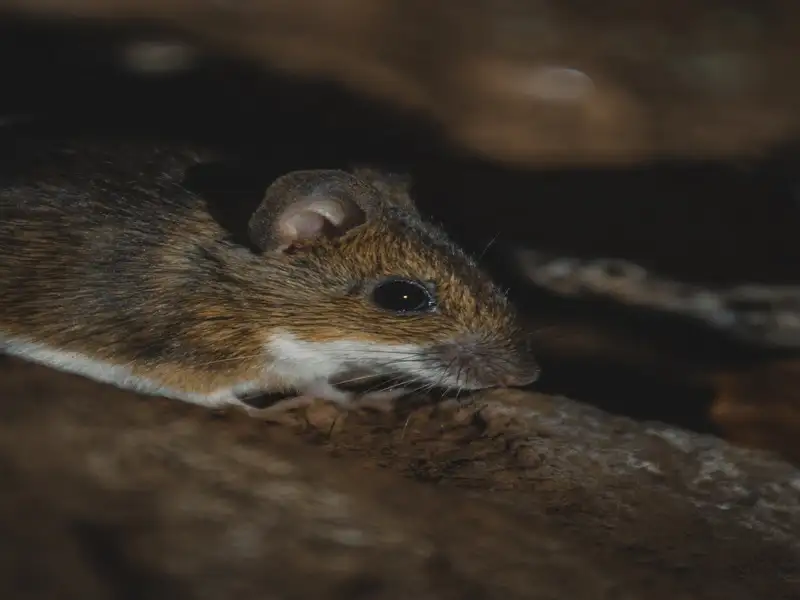
Why House Mice Are the Most Common Rodent Problem in Pharr TX Homes
Of the three rodent species found in Pharr — roof rats, Norway rats, and house mice — the house mouse (Mus musculus) is the one we find most frequently inside Pharr homes. It is also the one most likely to go undetected for weeks or months before the infestation reaches a size that produces obvious signs.
Unlike roof rats, which make audible thumping sounds in the attic and leave clearly visible droppings at elevated locations, house mice live quietly inside wall voids, behind kitchen appliances, and inside insulation. They rarely venture far from their nesting area. A homeowner can have dozens of mice living inside their walls and only notice a few rice-grain-sized droppings under the sink or a gnaw mark on a cereal box.
Why Pharr homes are especially vulnerable to house mice:
Pharr’s average household size is 3.4 people — one of the highest in the Rio Grande Valley. Large families mean frequent food preparation, extensive pantry storage, and more food residue on surfaces and in storage areas. House mice do not need much — a few crumbs under a stove or a small gap in a food container is enough to sustain a colony indefinitely.
Pharr’s housing stock includes a significant number of homes built in the 1950s through 1970s, particularly in South Pharr and the Las Milpas colonia. These older homes have original plumbing penetrations, deteriorated door sweeps, cracked stucco around utilities, and gaps at the cut-down base of garage doors that were never designed to exclude a creature that needs only a quarter-inch opening to enter.
And Pharr’s humid subtropical climate means there is no winter cold snap that kills off mouse populations or slows their reproductive cycle. A mouse colony in Pharr breeds continuously — twelve months of the year, with no seasonal reset.
How Fast a Mouse Problem Grows in Pharr TX — The Numbers You Need to See
This is the section most Pharr homeowners wish they had read before waiting two months to call.
A single female house mouse produces six litters per year. Each litter contains six to eight offspring. Those offspring reach reproductive maturity in six weeks. In Pharr’s climate, with no winter break in the cycle, the math compounds quickly:
| Month | Approximate Mouse Population |
|---|---|
| Month 1 | 2 mice (original pair) |
| Month 2 | 10–15 mice |
| Month 3 | 30–50 mice |
| Month 4 | 80–120 mice |
| Month 6 | 200+ mice |
This is why the homeowner on Reddit who “set out traps, caught 80 mice, and still had a problem” is not an unusual case — it is what happens when trapping addresses the symptom but not the source. The colony reproduces faster than snap traps remove individuals, and without sealing the entry points, new mice from the surrounding environment continue to enter.
In Pharr, where dense residential neighborhoods mean mice travel laterally through connected fence lines, utility corridors, and shared wall cavities between attached homes, a two-mouse problem on your side of the property line is often a neighborhood-level pressure event being funneled through specific gaps in your exterior.
Call for a Same-Day Mouse Inspection
How to Tell If You Have Mice in Your Pharr TX Home
House mice leave specific evidence — and knowing what to look for tells you both that you have mice and roughly how established the infestation is.
Droppings — the most reliable sign House mouse droppings are small — roughly the size of a grain of rice, 3 to 6 millimeters long, dark brown to black, and pointed at both ends. Fresh droppings are dark and moist. Older droppings are grey and crumble when touched. Location matters: droppings found in kitchen cabinets, pantry corners, inside drawers, under the sink, and along baseboards indicate an established colony with regular travel routes. A few droppings in one location suggest early activity. Droppings spread across multiple rooms indicate a larger, more established infestation.
Gnaw marks House mice gnaw constantly — their incisors grow continuously and must be filed down. Gnaw marks appear on food packaging (look for small, rough-edged holes in cardboard and plastic), on wooden baseboards and cabinet corners, on utility wiring insulation, and on the soft foam around pipe penetrations in cabinets. Fresh gnaw marks are light-colored; older marks darken with time.
Scratching sounds — specifically inside walls Roof rats scratch from overhead — from the ceiling and attic. House mice scratch from inside walls, behind cabinets, and under floors. The sound is lighter and faster than rat movement — a quick, skittering scratching, most active between late evening and early morning. If the sound is coming from inside the walls of a Pharr home rather than overhead, it is almost certainly mice, not rats.
Nesting material Mice build nests from shredded paper, fabric, insulation, and any soft material they can find. Finding a nest — a small pile of shredded material tucked into the back corner of a drawer, inside a stored box, or behind the insulation panel of a refrigerator — confirms an established infestation.
Ammonia odor A concentrated musky ammonia smell in enclosed spaces — under sinks, inside cabinets, in storage rooms — is mouse urine. A strong ammonia smell in a confined area indicates significant urine accumulation and a well-established colony.
Grease smears Mice travel the same routes repeatedly. Their fur deposits a dark grease smear along baseboards, at entry point edges, and along the base of walls. These smears indicate a heavily used travel corridor and help us identify exactly where traps and exclusion work need to go.
Where Mice Enter Pharr TX Homes — The 10 Entry Points We Check
House mice need a gap of only a quarter inch — roughly the diameter of a pencil — to enter a structure. In Pharr’s housing stock, that quarter-inch gap exists in multiple locations in most homes, particularly older construction.
These are the ten entry points we inspect in every Pharr mouse control job:
1. AC line penetrations through exterior walls Every central air conditioning system has refrigerant lines, electrical conduit, and a condensate drain running from the outdoor unit through the exterior wall into the home. The gap around these penetrations — even if originally caulked — opens over time from thermal expansion in Pharr’s extreme heat. A gap of a quarter inch around an AC line is the single most common mouse entry point we find in Pharr residential properties.
2. Door sweep gaps A worn or improperly fitted door sweep leaves a gap at the base of exterior doors. House mice compress their body and slide through. Check your front, back, and garage entry doors — run your fingers along the base and feel for daylight. Any gap you can feel is a gap a mouse can use.
3. Garage door base cut-down Pharr garage doors are typically cut down at the base to allow water drainage on the concrete slab — a standard construction practice in South Texas. This creates a consistent gap that house mice enter through regularly. A garage door threshold seal resolves this permanently.
4. Dryer vent penetrations The dryer vent exits through the exterior wall and is covered with a flap vent that does not always seat properly. Gaps around the vent sleeve or a damaged vent flap are regular mouse entry points, particularly in older Pharr homes where the original plastic vent has cracked from UV exposure.
5. Utility pipe penetrations in cabinets Under every kitchen and bathroom sink, water supply lines and drain pipes penetrate through the cabinet floor and exterior wall. The gap around these pipes is often covered only by a loose escutcheon plate or left open entirely. Mice enter directly through these gaps and establish nesting areas inside the wall void immediately adjacent to the cabinet.
6. Gaps around electrical conduit and boxes Electrical conduit enters the home through the exterior wall, and exterior outlet and switch boxes develop gaps as foundation settling pulls them slightly away from the wall face. These gaps are small but sufficient for house mice.
7. Stucco cracks Pharr’s extreme heat — average highs of 97°F in August, with all-time records above 110°F — cycles exterior stucco through repeated expansion and contraction. Hairline cracks develop over years and eventually widen to quarter-inch gaps, particularly at corners, around window frames, and where stucco meets different materials.
8. Foundation weep holes Brick or masonry construction often includes weep holes — intentional small openings at the base of the wall to allow moisture drainage. These are exactly quarter-inch sized and are standard mouse entry points in Pharr homes with brick or masonry construction.
9. Roof vent and exhaust vent gaps Bathroom exhaust vents, kitchen exhaust vents, and utility vents exit through the roof or exterior wall. Damaged screening, missing vent covers, or the gap around the vent sleeve are all mouse entry points. This is more commonly a rat issue but also relevant for mice in attic spaces.
10. Gaps where different materials meet Where the exterior wall meets the foundation, where siding meets trim, where the roofline meets the soffit — any junction between different building materials develops gaps over time in Pharr’s climate. These junctions need inspection in any home over ten years old.
How We Eliminate Mice From Pharr TX Homes — Step by Step
Mouse control that actually works follows a specific sequence. Every step matters, and skipping any one of them is why so many Pharr homeowners spend months dealing with a problem that never fully resolves.
Step 1 — Mouse-Specific Interior Inspection
We inspect every area where mouse activity is possible — under sinks, inside cabinets, behind appliances, in storage rooms, in the garage, and in the attic space if the infestation has spread there. We identify droppings and assess their freshness to understand how active the colony is. We identify grease smears to map travel routes. We locate nesting sites. We note the specific locations of gnaw damage on wiring, plumbing insulation, and food packaging.
This inspection tells us where the mice are concentrated, how established the colony is, and where to place treatment for maximum effectiveness.
Step 2 — Exterior Entry Point Audit
Simultaneously, we work through all ten exterior entry points on a systematic inspection of the home’s exterior. We photograph every gap we find. You will see exactly where mice are entering your home — not a general statement about “possible entry points,” but specific, photographed gaps with a clear remediation plan for each one.
Step 3 — Interior Treatment — Trapping and Bait Stations
For house mice, we deploy a combination of interior snap traps and tamper-resistant bait stations. Snap traps are positioned at wall junctions and along baseboards at identified travel routes — specifically where grease smears indicate regular mouse traffic. Mice are less neophobic than roof rats and will interact with correctly placed traps within 24 to 48 hours.
Tamper-resistant bait stations for mice are small locked units — typically 5 to 6 inches long — placed under sinks, inside cabinets at identified travel corridors, and in utility areas. The stations are physically locked. Children and pets cannot open them or access the bait inside. Before we place any station or trap, we tell you exactly what it contains, where it is located, and what to expect.
All rodenticides used are EPA-registered and Texas Department of Agriculture approved. We use first-generation anticoagulants where appropriate — products with an established antidote (Vitamin K1) that provide an additional safety margin for households with children and pets.
Step 4 — Exclusion — Sealing Every Entry Point
This is the step that separates a permanent solution from a recurring problem. After treatment begins, we seal every entry point identified in the exterior audit:
- Steel wool packed into gaps around AC line penetrations, utility pipes, and cable entries, then sealed with appropriate caulk or foam
- Hardware cloth installed over any opening larger than a quarter inch that cannot be fully sealed with caulk
- Door sweep replacement where existing sweeps have gaps
- Garage door threshold seal installation
- Mortar repair around foundation-level utility penetrations in older Pharr homes
- Escutcheon plates properly seated around under-sink pipe penetrations
Without exclusion, the treatment eliminates the current colony but leaves the same gaps open for new mice from the surrounding neighborhood to enter. In Pharr’s dense residential environment, that re-infestation typically happens within weeks.
Step 5 — Follow-Up
We return after the initial treatment to assess trap catch, check bait station consumption, confirm exclusion materials are intact, and verify that activity signs are declining. If a trap location is producing no catches and activity evidence suggests mice are still present nearby, we reposition. If a gap was missed in the initial exclusion, we seal it. Mouse control is considered complete when follow-up inspection finds no fresh droppings, no new gnaw marks, and no trap activity over consecutive visits.
Book Your Mouse Inspection Today
Why DIY Mouse Control Usually Fails in Pharr TX Homes
Pharr homeowners spend significant money on store-bought traps and bait before calling a professional — and most of that spending does not solve the problem. Here is why.
Traps catch mice but do not address the colony. A snap trap catches the individual mouse that finds it. It does not catch the six mice in the wall void that did not come out that night. And while that one trap is catching the occasional mouse, the colony is reproducing. The colony grows faster than snap traps can remove individuals from a population that is actively breeding.
Wrong placement means zero catches. House mice travel along the base of walls — they run with their body touching the wall surface on one side. A snap trap placed perpendicular to the wall, in the middle of the floor, or in open space will sit untouched indefinitely. Correct placement is parallel to the wall, trigger end facing the wall, at a confirmed travel route. Most homeowners place traps in the wrong locations and conclude “the mice are too smart for traps” — the traps are simply in the wrong place.
Glue boards are ineffective for established infestations. Glue boards work on single animals that wander across them. In an established colony where mice have defined travel routes they use consistently, a glue board placed off-route catches nothing. And glue boards left too long in Pharr’s heat collect dust, lose their adhesion, and become useless without the homeowner realizing it.
No entry point sealing means re-infestation. Even when a homeowner successfully reduces the population through trapping, the entry points remain open. Mice from neighboring properties — which in Pharr’s dense residential neighborhoods are always present — re-enter through the same gaps within days or weeks of the population being reduced. This is the cycle that produces the “I’ve caught dozens and still have mice” frustration that is so common on Reddit and in Quora answers about mouse control.
The permanent solution requires identifying the entry points, treating the existing population, and physically closing every gap through which mice are entering. All three steps together — not any one of them in isolation.
What House Mice Risk to Your Family’s Health in Pharr TX
House mice are not just a nuisance. An established colony inside a Pharr home creates specific, documented health risks — particularly relevant in a city where 53% of households have children under 18.
Hantavirus pulmonary syndrome Hantavirus is transmitted when humans inhale air contaminated with dried mouse droppings, urine, or saliva. The critical point is that the risk is highest not during the infestation itself but during cleanup — disturbing a mouse nest or sweeping up dried droppings in a Pharr attic, storage room, or cabinet creates airborne particles that can carry the virus. The CDC recommends wetting down contaminated areas with disinfectant before cleanup, wearing gloves and an N95 respirator, and sealing contaminated material in bags before disposal. Professional remediation of heavily infested areas in Pharr homes handles this process correctly.
Salmonellosis House mice contaminate food preparation surfaces, pantry shelves, and food storage containers through their droppings and urine. A mouse that has traveled through droppings in a wall void and then walked across a kitchen counter has contaminated that surface. In Pharr’s large family households — where food preparation is frequent and pantry storage is extensive — an active house mouse infestation represents a continuous food safety risk for the family.
Leptospirosis Transmitted through contact with surfaces contaminated by mouse urine. In Pharr, where September and October flooding events bring standing water into yards and low-lying areas, the risk of leptospirosis increases when mouse urine mixes into flood water that children may contact.
Wiring damage and fire risk House mice gnaw on electrical wiring insulation throughout the wall voids they inhabit. Exposed wiring in a Pharr home wall or attic is a documented fire risk. This is not a theoretical risk — chewed wiring in walls is a contributing factor in residential fires, and an active mouse infestation in an older Pharr home with original wiring deserves the same urgency as any other fire safety concern.
Food storage damage Beyond contamination, mice gnaw through food packaging consistently. In a Pharr household where bulk dry goods — rice, flour, beans, tortillas, cereal — are stored in pantry areas, an established mouse infestation can contaminate and destroy significant amounts of food before the problem is noticed.
Do You Have Mice or Rats in Your Pharr TX Home? How to Tell
This is one of the most common questions we receive before a Pharr inspection. The distinction matters because the treatment approach, entry point locations, and exclusion work are different for each species.
Size of droppings — most reliable indicator Mouse droppings are rice-grain sized — 3 to 6 millimeters, pointed at both ends. Rat droppings are noticeably larger — half an inch or more for roof rats, up to three-quarters of an inch for Norway rats. If you photograph the droppings and share them with us before the inspection, we can often give you a preliminary identification by phone.
Location of droppings Mouse droppings are found at or below counter height — in cabinet interiors, under sinks, in pantry corners, along baseboards. Roof rat droppings are found at elevated locations — on attic beams, shelf ledges, and wall top plates. Norway rat droppings are found at ground level near water sources.
Sounds Mice in walls produce a light, rapid scratching sound from inside the wall. Roof rats in the attic produce heavier thumping, rolling, and running sounds from overhead. The location and weight of the sound is often enough to distinguish species before we arrive.
Entry point size A confirmed entry point smaller than half an inch is a mouse entry point — rats need at least half an inch. If the gap around a pipe penetration is only slightly visible, it is almost certainly being used by mice, not rats.
If you have identified signs that could indicate either species, the inspection will confirm it. We identify the species from physical evidence before any treatment is planned — treating a rat infestation as a mouse infestation, or vice versa, produces poor results.
If you have confirmed rats — roof rats or Norway rats — see our Rat Control Pharr TX page for the specific treatment approach for each rat species.
How Much Does Mouse Control Cost in Pharr TX?
For a standard house mouse infestation in a Pharr home — inspection, interior treatment with tamper-resistant bait stations and snap traps, and follow-up — expect to pay between $150 and $400 depending on the size of the home and the extent of the infestation. Comprehensive exclusion work — the physical sealing of all identified entry points — adds $300 to $1,000 depending on the number of entry points, the materials required, and the home’s construction. The initial inspection is free. There is no hidden estimate fee, and we give you a written cost breakdown before any work begins.
How Long Does It Take to Get Rid of Mice in Pharr TX?
With correct placement, interior snap traps begin catching mice within 24 to 48 hours. Tamper-resistant bait stations begin affecting the population within the first week. A measurable reduction in activity signs — fewer fresh droppings, less trap activity — is typically visible within the first ten days. Full resolution of an established infestation, confirmed by the follow-up inspection showing no fresh activity, typically takes two to four weeks from the first treatment. The exclusion work — the physical sealing of entry points — is what determines whether the problem stays resolved, and that protection is immediate once the exclusion is complete.
Is One Mouse in My Pharr Home a Sign of a Bigger Problem?
Sometimes one mouse is one mouse — particularly in late fall when a single animal enters through an exterior gap seeking warmth. One trap, one catch, and no further signs over two weeks is a reasonable outcome for an early-stage encounter. However, because house mice rarely leave their established nesting area voluntarily, a single mouse sighting inside a Pharr home — particularly in the kitchen or near food storage — more commonly indicates that a colony is already established in a nearby wall void or cabinet space and you are seeing one individual from a larger population. A single inspection resolves the uncertainty and costs nothing.
Are the Products Used to Control Mice Safe for My Children and Pets in Pharr?
All bait stations we deploy for mouse control are tamper-resistant — small, locked units that mice access through openings too small for a child’s fingers or a pet’s nose. We do not place open bait in accessible locations. The rodenticides used are EPA-registered and applied according to manufacturer label directions. We explain exactly what is placed, where it is located, and what the safety protocol is before we leave your home. We also use first-generation anticoagulant rodenticides where appropriate — products for which an established antidote (Vitamin K1) exists — in households with children and pets, providing an additional safety margin.
Frequently Asked Questions — Mouse Control in Pharr TX
What do house mouse droppings look like in a Pharr TX home?
House mouse droppings are small — roughly the size of a grain of rice, 3 to 6 millimeters long, dark brown to black when fresh, and pointed at both ends. They are found along established travel routes: the interior corners of kitchen cabinets, pantry shelves, the space under sinks, inside drawers, and along baseboards near the wall-floor junction. Fresh droppings are dark and slightly moist. Droppings older than a few days turn grey and crumble when touched. If you find droppings in multiple locations throughout the kitchen and adjacent areas, the colony is established. A single location with a few droppings may indicate early activity.
How are mice getting into my Pharr home?
House mice need a gap of only a quarter inch to enter — approximately the diameter of a standard pencil. The most common entry points in Pharr homes are the gap around AC refrigerant line penetrations through the exterior wall, worn or missing door sweeps on exterior doors, the cut-down gap at the base of garage doors, the open space around under-sink pipe penetrations, gaps in exterior stucco where different materials meet, and foundation weep holes in masonry construction. Older homes in South Pharr and Las Milpas typically have multiple entry points from decades of thermal expansion cracking the original sealants. We photograph every entry point we find during inspection.
Can I get rid of mice in my Pharr home without calling a professional?
For a single mouse sighting with no other evidence, one well-placed snap trap along a baseboard at a confirmed travel route is reasonable to try. One catch and no further signs over two weeks is a satisfactory DIY outcome. Once you have found droppings in multiple locations, heard scratching inside walls on multiple nights, or noticed gnaw marks on food packaging or wiring, the colony is established and DIY trapping is unlikely to resolve it. The population is reproducing faster than traps can remove individuals, and without sealing the specific entry points — which requires identifying them first — new mice continue to enter from the surrounding neighborhood.
How do I know if my mice problem is getting better or worse?
The most reliable indicators are droppings and trap activity. Check the areas where you previously found droppings. Fewer fresh droppings over consecutive days indicates declining population. Zero fresh droppings over five to seven consecutive days, combined with no new trap catches, indicates the active infestation has been resolved. Continued or increasing fresh droppings indicates the population is not declining — either the treatment placement needs adjustment or exclusion work has not been completed and new mice are continuing to enter.
Do mice in Pharr TX carry hantavirus?
Hantavirus is primarily associated with deer mice rather than house mice (Mus musculus), which is the species we deal with in Pharr residential properties. However, house mice do carry and transmit other pathogens — salmonella through food contamination, leptospirosis through urine contact, and lymphocytic choriomeningitis virus (LCMV) through direct contact or inhalation of contaminated material. In any case, mouse droppings, urine, and nesting material in a Pharr home should be treated as potentially contaminated — wet down with disinfectant before handling, wear gloves, and use respiratory protection if disturbing a large accumulation of nesting material.
What is the difference between mouse control and mouse extermination in Pharr TX?
In practice, these terms describe the same service — eliminating a house mouse infestation from a Pharr home. “Extermination” implies a single elimination event; “mouse control” implies an ongoing management approach. For a standard residential infestation in Pharr, we use an integrated approach: interior trapping and bait stations to eliminate the current population, combined with physical exclusion to prevent re-entry. This is a one-time process with a follow-up inspection, not an ongoing monthly service — because permanent exclusion eliminates the need for recurring treatment.
Why does my Pharr neighbor have a mouse problem and I don’t — or vice versa?
Mouse pressure in Pharr is not uniform across adjacent properties. The determining factors are exterior sealing and food source management. A home with fully sealed AC line penetrations, fitted door sweeps, and a sealed garage door threshold resists mouse entry from the surrounding environment even when neighboring properties have active infestations. A home with multiple entry points is accessible regardless of cleanliness. In Pharr’s dense residential neighborhoods, mouse pressure moves through the environment constantly — the homes that experience infestations are typically the ones with the most accessible entry points, not necessarily the most food available.